

OCR Cambridge Technical Diploma in Health and Social Care Study Mode: Full Time | Course Level: Level 2
OCR Cambridge Technical Diploma in Health and Social Care
Where will this course lead?
Studying a Level 2 Cambridge Technical Diploma in Health and Social Care will aid progression to further study (level 3) and prepare learners to enter the workplace in due course. In the health and social sector, typical employment opportunities may include working as an apprentice or in a supervised entry role, depending on specific job requirements and age restrictions.
What will I study?
Learners will develop knowledge and understanding by applying their learning and skills in a work-related context.
Units include;
- Communication in health and social care,
- Individual rights in health and social care,
- Individual needs in health and social care,
- Ensuring safe environments in health and social care,
- Vocational experience in a health and social care setting,
- Cultural diversity in health and social care,
- Anatomy and physiology for health and social,
- The impact of diet on health.
How will this course be delivered?
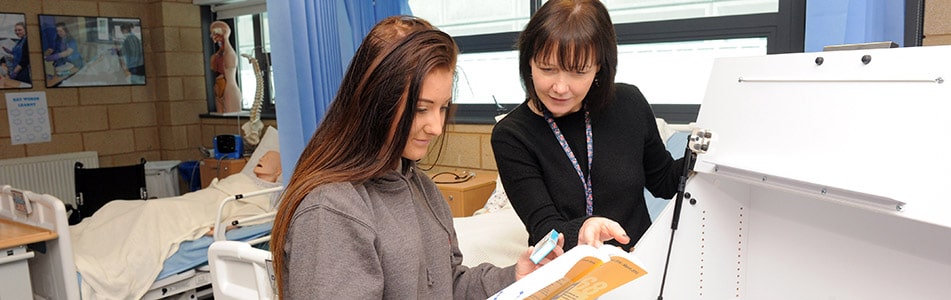
The level 2 qualification will be delivered through taught and practical sessions.
What qualifications will I get?
OCR Level 2 Cambridge Technical Diploma in Health and Social Care
Maths and English qualifications
How will I be assessed?
Through assignments, practical's, presentations, online assessments.
How do I get a place on the course?
Successful interview and reference / report from last educational establishment
What are the entry requirements?
Along with GCSE grades of mainly D/3' & E/2's learners must have a keen interest in working within the sector. Learners would ideally be working at or towards entry level EL3 /1/ GCSE equivalent for Maths/English
What else do I need to know?
Learners on the level 2 course will be given the opportunity to complete work experience in the sector.
It is a requirement of this course that all learners complete a DBS check before they are allowed out on their work experience.
All learners are required to wear the Care and Education uniform
What can I do after this course?
Working in the Health and social care sector
Level 3 health and social care
Apprenticeships
Learners who enrol on Health and social care courses are required to wear uniforms, complete a DBS check and a trip will be offered. These additions will require a contribution from the student; costs available prior to enrolment.
Blossomfield Campus
Sept-2026
Various
TBC
N/A For 16 to 18 Year Olds
HECAA013BCF0
Full Time
Woodlands Campus
Sept-2026
Various
TBC
N/A For 16 to 18 Year Olds
HECAA013CCF0
Full Time


Nurse
Nurses provide general and/or specialised nursing care for the sick, injured and others in need of such care, assist medical doctors with their tasks and work with other healthcare professionals and within teams of healthcare workers. They advise on and teach nursing practice.
What’s Involved?
A nurse assists medical doctors and works with other healthcare professionals to deal with emergencies and pre-planned treatment of patients; manages own case load; monitors patient's progress, administers drugs and medicines, applies surgical dressings and gives other forms of treatment; participates in the preparation for physical and psychological treatment of mentally ill patients; plans duty rotas and organises and directs the work and training of ward and theatre nursing staff; advises on nursing care, disease prevention, nutrition, etc. and liaises with hospital board/ management on issues concerning nursing policy; plans, manages, provides and evaluates nursing care services for patients, supervises the implementation of nursing care plans; delivers lectures and other forms of formal training relating to nursing practice.Occupational Therapist
Occupational therapists work with people who have a physical or learning disability or mental illness, actively engaging them in purposeful activities in order to maximise self-confidence, independent functioning and well-being.
What’s Involved?
An Occupational Therapist considers the physical, psychological and social needs of a patient that may result from illness, injury, congenital condition or lifestyle problems; devises, designs, initiates and monitors carefully selected and graded treatments and activities as part of the assessment and intervention process; liaises with a wide variety of other professionals in planning and reviewing ongoing treatments; trains students and supervises the work of occupational therapy assistants; makes home visits to clients, families and carers to organise support and rehabilitation and assist them to deal and cope with disability; counsels clients in ways to promote a healthy lifestyle, prevention of illness and/or preparation for coping with increasing stages of illness; maintains patient records, manages caseloads.Health Care Practice Manager
Healthcare practice managers plan, organise, direct and co-ordinate the work and resources of medical, dental and other types of healthcare practice, including veterinary practices.
What’s Involved?
Health Care Practice Managers plan work schedules, assign tasks and delegate responsibilities of practice staff. They oversee staff training and monitor training needs. They take responsibility for health and safety matters within the practice. They also negotiate contracts for services with other health care providers and purchasers. They maintain patient files on medical history, consultations made and treatment undertaken and/or drugs prescribed. They organise duty rosters for professional and support staff in practice. They also take responsibility for stock control of practice equipment, drugs etc. They liaise with relevant outside organisations (e.g. NHS trust, PCT, social services, drug companies, professional bodies). There also responsible for budgeting, pricing and accounting activities within the practice.Social Worker
Social workers provide information, advice and support to those who are socially excluded or are experiencing crisis; they protect the welfare of vulnerable groups including children, young people, people with disabilities, elderly people and people who are mentally or physically ill, and they may specialise in specific areas of work.
What’s Involved?
A Social Worker liaises with other health and social care professionals and agencies to identify those in need and at risk within the local community; interviews individuals and groups to assess and review the nature and extent of difficulties; undertakes and writes up assessments to specified standards; arranges for further counselling or assistance in the form of financial or material help; organises support and develops care plans to address service users' needs; keeps case records, prepares reports and participates in team meetings; gives evidence in court; participates in training and supervision.
Paramedic
Paramedics provide first aid and life support treatment in emergency situations and transport sick and injured people who require skilled treatment.
What’s Involved?
A paramedic drives ambulance or accompanies driver to respond to calls for assistance at accidents, emergencies and other incidents; assesses the nature of injuries, provides first aid treatment and ascertains appropriate method of conveying patient; resuscitates and/or stabilises patient using relevant techniques, equipment and drugs; transports and accompanies patients who either require or potentially require skilled treatment whilst travelling; briefs other medical staff when handing over the patient, and completes patient report forms describing the patient's condition and any treatment provided.Care Worker
Care workers and home carers attend to the personal needs and comforts of the elderly and the infirm with care and support needs ('service users') within residential care establishments, day care establishments or in their own homes.
What’s Involved?
A Care Worker assists and enables service users to dress, undress, wash, use the toilet and bathe; serves meals to service users at table or in bed, and assists with feeding if required; generally assists with service users' overall comfort and well being; provides interest and activities to stimulate and engage the service user; helps with daily activities such as letter writing, paying bills, collecting benefits; undertakes light cleaning and domestic duties including meal preparation as required; monitors service users' conditions by taking temperature, pulse, respiration and weight, and contributes to record keeping; liaises with professional staff in carrying out care plans etc.
Midwife
Midwives deliver, or assist in the delivery of babies, provide antenatal and postnatal care and advise parents on baby care. They work with other healthcare professionals, and advise on and teach midwifery practice.
What’s Involved?
A midwife monitors condition and progress of patient and baby throughout pregnancy; delivers babies in normal births and assists doctors with difficult deliveries; monitors recovery of mother in postnatal period and supervises the nursing of premature and other babies requiring special attention; advises on baby care, exercise, diet and family planning issues; supervises more junior staff and directs the work of the midwifery unit; plans and manages midwifery care services; delivers lectures and other forms of training in midwifery practice.Counsellor
Jobholders in this unit group provide counselling services to clients with a wide variety of problems by means of assisting them to reach their own resolutions to the difficulties they face. Counsellors may specialise in a particular area or client group or address a wide range of issues.
What’s Involved?
A counsellor meets clients face-to-face, working either one-to-one or with couples or families, or by telephone or internet; encourages clients to discuss their feelings in relation to their problems, aiming to ensure that an understanding of the issues is achieved; presents different perspectives to the problem areas identified; refers to other appropriate sources of help; keeps accurate and confidential records.
Youth and Community Worker
Youth and community workers provide support to individuals or groups of individuals through a range of activities or services that aim to encourage participation in social and community life and promote personal and social development.
What’s Involved?
Youth and Community Workers organise social, recreational and educational activities in local community and youth groups. They undertake the day-to-day running of community centres and supervise the activities of part-time and voluntary workers. They liaise and support voluntary workers running groups in village halls, churches, mosques and other places of worship. They advise individuals with particular needs or problems through informal discussion, individual counselling or formal group discussion. They also help set up credit unions, encourage parents to establish playgroups, work with other groups to find solutions to shared concerns or problems.Psychologist
Psychologists research, study and assess emotional, cognitive and behavioural processes and abnormalities in human beings and animals and how these are affected by genetic, physical and social factors.
What’s Involved?
Psychologists develop and administer tests to measure intelligence, abilities, aptitudes, etc. and assess results. They develop treatments and guidance methods and give treatment or guidance using a variety of therapy and counselling techniques. They observe and experiment on humans and animals to measure mental and physical characteristics. They also analyse the effect of hereditary, social and physical factors on thought and behaviour. They study psychological factors in the treatment and prevention of mental illness or emotional and personality disorders. They also maintain required contacts with family members, education or other health professionals, as appropriate, and recommend possible solutions to problems presented. They apply professional knowledge and techniques within the workplace, addressing issues such as job design, work groups, motivation etc. They apply psychological treatment methods to help athletes achieve optimum mental health and enhance sporting performance.Speech and Language Therapist
Speech and language therapists are responsible for the assessment, diagnosis and treatment of speech, language, fluency and voice disorders caused by disability, injury or illness.
What’s Involved?
Speech and Language Therapists assess, test and diagnose a client's condition. They design and initiate appropriate rehabilitation and/or remedial programmes of treatment. They treat speech and language disorders by coaching and counselling clients or through the use of artificial communication devices. They also attend case conferences and liaise with other specialists such as doctors, teachers, social workers and psychologists. They counsel relatives to help cope with the problems created by a patient's disability. They write reports and maintain client caseloads.Therapist
Job holders in this unit group plan and apply physical and therapeutic treatments and activities to assist recovery from physical and mental illness and to minimise the effects of disabilities not elsewhere classified in MINOR GROUP 222: Therapy professionals.
What’s Involved?
A Therapist prescribes diet therapy and gives advice to patients, health care professionals and the public on dietetic and nutritional matters for those with special dietary requirements or to prevent illness amongst the general population; diagnoses and treats disorders of vision and eye movements, monitors subsequent progress and recommends further optical, pharmacological or surgical treatment as required; manipulates and massages patient to discover the cause of pain, relieve discomfort, restore function and mobility and to correct irregularities in body structure; adopts a holistic approach in assessing the overall health of the patient, and treats by inserting needles under the skin at particular locations according to the disorder being treated; administers aromatic herbs and oils and massage to relieve pain and restore health; assesses and provides treatment for people with mental disabilities, or those suffering with mental illness, stress, and emotional and relationship problems; diagnoses and treats behavioural problems in animals.Radiographer
Medical (diagnostic) radiographers operate x-ray machines, ultrasound, magnetic resonance imaging and other imaging devices for diagnostic and therapeutic purposes, assist in the diagnosis of injuries and diseases and are involved in intervention procedures such as the removal of kidney stones. They operate under the supervision of senior staff. Therapeutic radiographers specialise in the planning and administration of radiotherapy treatment for patients with cancer.
What’s Involved?
A Radiographer uses a range of imaging devices for diagnostic and therapeutic purposes; assesses patients and interprets clinical requirements to determine appropriate radiographic treatments; verifies identity of patient and ensures that necessary preparations have been made for the examination/treatment; decides length and intensity of exposure or strength of dosage of isotope; positions patient and operates x-ray, scanning or fluoroscopic equipment; maintains records of all radiographic/therapeutic work undertaken; plans course of treatment with clinical oncologists and physicists; calculates radiation dosage and maps volume to be treated; explains treatment to patient and management of any side effects; carries out post-treatment reviews and follow-ups.
Phlebotomist
Phlebotomists take blood samples from patients which are examined in a laboratory and the results can be used to quickly diagnose diseases and conditions.
What’s Involved?
Phlebotomists reassure nervous or distressed patients, insert a hypodermic needle and draw off the blood into a tube, apply a dressing to the puncture made by the needle, label the blood sample, deliver the sample to the correct laboratory and complete records and enter data on a computer.
Nursing Assistant
Nursing auxiliaries and assistants assist doctors, nurses and other health professionals in caring for the sick and injured within hospitals, homes, clinics and the wider community.
What’s Involved?
A Nursing Assistant performs basic clinical tasks such as taking patients' temperature and pulse, weighing and measuring, performing urine tests and extracting blood samples; prepares patient for examination and treatment; distributes and serves food, assists patients in feeding and prepares snacks and hot drinks; assists patients in washing, dressing, toiletry activities and general mobility; changes bed linen, makes beds and tidies wards.