

We are committed to a sustainable future.
At Solihull College & University Centre we are dedicated to reducing our impact on the planet for the future of our students. At a time when urgent action is needed, the College is making ambitious steps towards becoming a sustainable college by embedding sustainability across campus, curriculum and college culture.

Climate Emergency Declaration
In , the college made a commitment to recognising and playing our part in tackling climate change by announcing our Climate Emergency Declaration
Climate Emergency Declaration
Climate Emergency Declaration
Climate change is one of the most urgent global challenges facing us today.
The Intergovernmental Panel on Climate Change (IPPC) has reported that a 1.5℃ rise in global temperature by is now unavoidable and that immediate and ambitious action is required to prevent this increase being exceeded. It is therefore inevitable that the planet will experience greater risk to flooding, extreme weather conditions, water shortages, deterioration in air quality and heat exposure. It is imperative that we take action now to mitigate against and adapt to climate change.
The 27th Conference of the Parties to the United Nations Framework Convention on Climate Change (COP27) in November builds on the outcomes of COP26 to deliver action on an array of issues critical to tackling the climate emergency, including: urgently reducing greenhouse gas emissions, building resilience and adapting to the inevitable impacts of climate change.
Faced with a growing energy crisis, record greenhouse gas concentrations and increasing extreme weather events, COP27 seeks renewed solidarity between countries, to deliver on the landmark Paris Agreement, for people and the planet.
In support of this, Solihull College and University Centre hereby declares a Climate Emergency and a commitment to become net zero by in line with the IPPC recommendations.
“All organisations have a duty to act and Colleges such as ours have an important additional role to play through our teaching, research and innovation on sustainability. We felt that it was important to declare a climate emergency backed up with meaningful targets through to and will be pushing ahead to develop a strategy and actions to achieve this target.
Positively, this is an opportunity to create a better and sustainable future in terms of the environment, economy and health and well-being.”
The College’s commitment includes actions to reduce carbon emissions from energy and water use across the three campuses, reduce waste, maximise re-use potential, increase recycling, promote sustainable travel as well as embedded sustainability into the heart of the College’s culture, curriculum and student experience. Our College is guided by principles of social responsibility and we recognise that the UN’s Sustainable Development Goals (SDGs) are at the heart of this mission.
We are delivering the following actions to achieve this:
- Adopting the 17 Sustainable Development Goals (SDGs).
- Embedding sustainability into the curriculum and student life whilst empowering students to contribute and drive the climate change agenda forward.
- Developing a Sustainability Strategy and delivery plan to reduce our carbon footprint, taking steps to become a Net Zero college, including: energy, water, waste, buildings, vehicles and travel, natural environment and purchasing.
- Taking positive steps to mitigate against and adapt to the effects of climate change.
- Leading by example and encouraging further action, by others, through information, education and influence.
- Providing the necessary resources to deliver on our carbon reduction commitment.
- Firstly, establishing our carbon footprint and secondly, monitoring and reporting on our progress in meeting reduction targets.
- Positively encouraging students, staff, visitors and our suppliers/contractors to help us explore ways that can make a difference and contribute towards a more sustainable and environmentally-friendly lifestyle.
- Giving our students a voice in the strategic direction that we take, including college-based projects led by the Green Champions forum and through lobbying and campaigning.
- Seeking involvement from our students in global, national and local sustainability initiatives and projects.
- Engaging with other educational establishments to share best practice and identify opportunities for improved sustainability.
- Working in collaboration with partners, businesses and other organisations/agencies on local and regional initiatives.
- Promoting progression into the expanding green skills employment sector through the curriculum, career fairs, business engagement and other opportunities.
Our Strategy
The College’s commitment includes actions to reduce carbon emissions across the three campuses, reduce waste, maximise re-use potential, increase recycling, promote sustainable travel as well as embedded sustainability into the heart of the College’s culture, curriculum and student experience. Our College is guided by principles of social responsibility and we recognise that the UN’s SDGs are at the heart of this mission.
To deliver on this commitment, a sustainability strategy (2022-2030) sets out the college’s ambitions and how we will achieve them across five key themes:
- Strategic Leadership And Commitment
- Net Zero College
- Green Skills And Green Jobs
- Embedding Sustainability In The Curriculum
- Embedding Sustainability In Student And Staff Experience
Read More


Related News
Campuses
We are transforming our estate to reduce carbon emissions, enhance biodiversity and create healthier, greener spaces for learners, staff and visitors. Our focus is on long-term infrastructure change supported by operational systems that reduce energy use and environmental impact across our campuses.
Our approach recognises that becoming a sustainable, net zero college requires action across buildings, energy, waste, travel and day-to-day operations.

Low-Carbon Heating Transformation
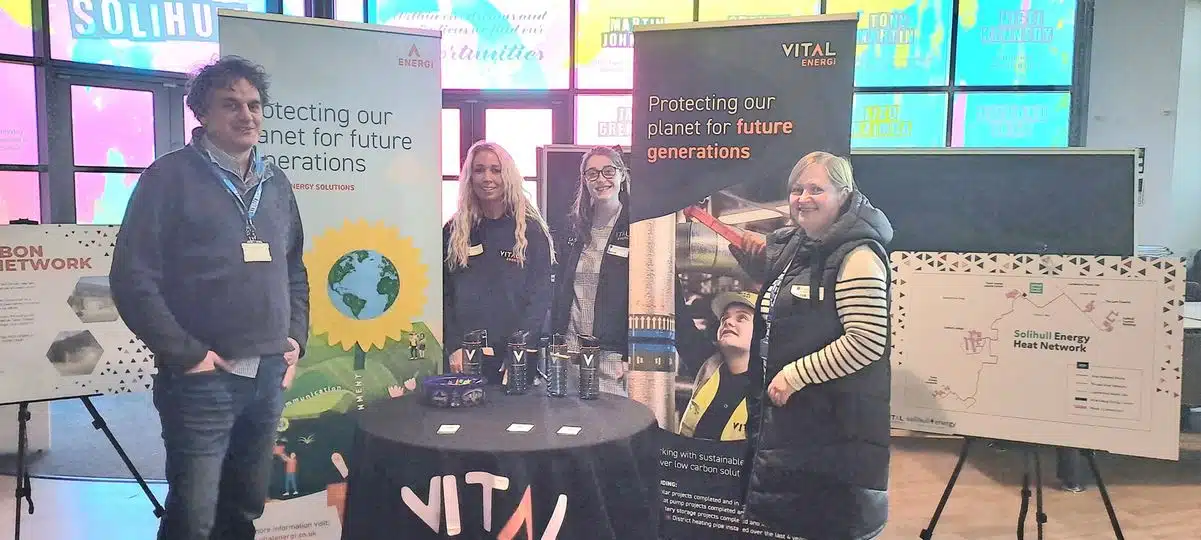
Through our link with the Solihull Low Carbon Energy Network, we are transitioning the Blossomfield campus onto renewable, low-carbon heat. Heating and hot water are being moved away from gas-based systems and supplied through networked air-source heat pump technology.
This represents a fundamental change in how the campus is heated, replacing fossil-fuel infrastructure with low-carbon systems designed for long-term decarbonisation.

Building Decarbonisation
Alongside changes to heating, we are reducing overall energy demand across our buildings. This includes improvements to insulation and building fabric, and upgrades to lighting and other energy-using systems.
Carbon reduction is treated as cumulative, delivered through multiple coordinated improvements across the estate.
Building Management System
We are upgrading our Building Management Systems to provide a single, coordinated way of monitoring and controlling heating and cooling across campuses.
This improves consistency, responsiveness and visibility of building performance, supporting comfort while reducing unnecessary energy use.

Recycling & Waste Reduction
Recycling and waste arrangements across our campuses have been redesigned to be clearer and more consistent. Simplified waste streams, improved signage and designated collection points support correct disposal and reduce contamination.
By aligning campus systems with familiar household recycling approaches, sustainable behaviour is supported through design.

Nature-Friendly Grounds
We are enhancing biodiversity across our estate through a coordinated approach to nature-friendly grounds management. This includes understanding existing habitats, improving planting practices and creating green spaces that support wildlife and wellbeing.
Our grounds are treated as part of the College’s environmental responsibility, contributing to ecological resilience and providing accessible, restorative spaces for the college community.

Curriculum
We embed sustainability within teaching and learning so every student develops the knowledge and confidence to contribute to a greener future. This is a whole-college approach, supporting subject-specific relevance and progression over time.
Embedding sustainability is treated as a curriculum design and capability issue, supported through planning, staff development and shared frameworks.

Green Pioneer Programme
The Green Pioneer Awards provide a structured framework for embedding sustainability across curriculum areas. Aligned with the United Nations Sustainable Development Goals, the programme supports teaching teams to integrate sustainability in ways that are meaningful within their disciplines.
Recognition is awarded at Bronze, Silver or Gold level, reflecting the extent to which sustainability is embedded in curriculum design, teaching practice and departmental culture.

Low-Carbon Skills Training
We provide specialist facilities and training that support the development of low-carbon skills aligned with changing industry needs. This includes hands-on learning environments focused on renewable and low-carbon technologies.
Curriculum investment is aligned with regional and national transitions, supporting learners to develop skills relevant to emerging green careers.

Real-World Sustainability Experience
Students are encouraged to engage with sustainability beyond the classroom through participation in regional events, collaborative forums and sector-led discussions.
These experiences build understanding of how sustainability operates in practice, supporting confidence, networks and insight into real-world application.
Culture
Sustainability thrives when everyone gets involved. We work to create a college culture where sustainability is part of everyday decision-making, supported by shared understanding, visible initiatives and collective responsibility.
This includes clear opportunities for staff and students to participate and contribute as part of college life.
Sustainable March
Sustainable March provides a focal point each year for sustainability activity across the College. Coordinated learning, enrichment and engagement reinforce sustainability as a shared priority.
The value lies in connecting curriculum, campus and community action.

Carbon Literacy
We deliver accredited Carbon Literacy training to staff and students to build shared understanding of climate change, carbon impacts and effective action.
The programme supports translation of learning into practical commitments that contribute to wider organisational change.

Behaviour Change & Zero-Waste Initiatives
We support behaviour-change initiatives that reduce waste and encourage responsible resource use, focusing on everyday practices where collective action can make a measurable difference.
These initiatives prioritise practicality and participation, reinforcing sustainable habits through simple actions.

Circular Economy Opportunities
Our RE:Vibe Swap Shop promotes reuse by enabling students, staff and visitors to exchange clothing and household items, with remaining items passed on for charitable reuse.
This makes circular economy principles visible within everyday college life.
Sustainable Travel
We support more sustainable travel choices by encouraging alternatives to single-occupancy car use, including public transport, active travel and shared travel options.
This recognises that travel behaviour is shaped by infrastructure, policy and convenience.
Staff Recruitment & Induction
Sustainability is embedded within staff recruitment, induction and ongoing development. This ensures environmental responsibility is understood as part of professional practice from the outset.
By integrating sustainability into organisational processes, it is reinforced as a shared institutional priority.
Partners